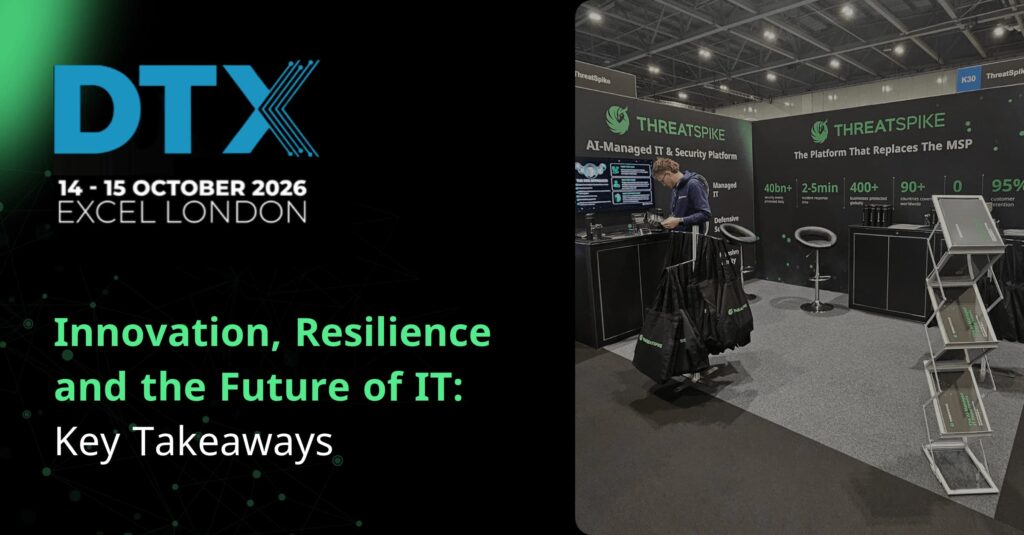
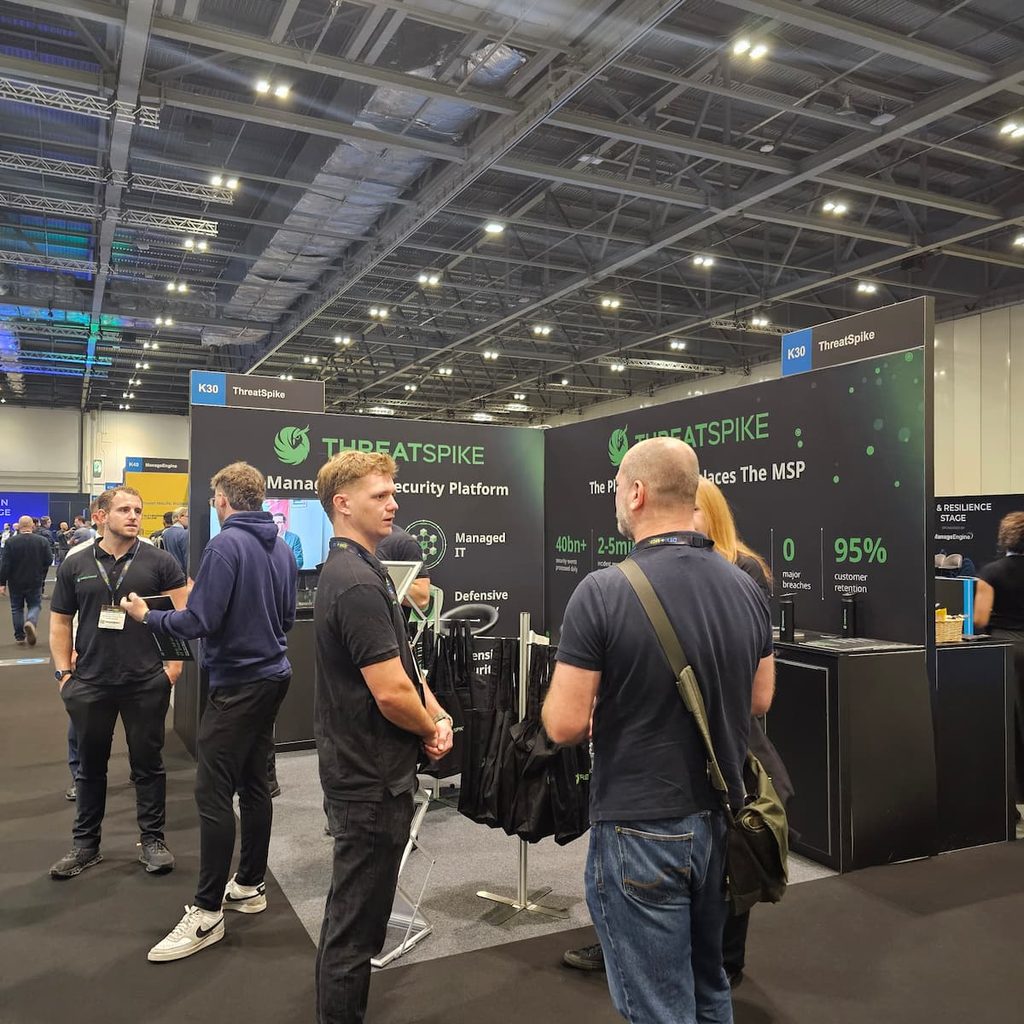
From 14-15th October, the ThreatSpike team joined technology leaders, cybersecurity professionals and industry innovators at DTX London 2026. Bringing together organisations from across the technology sector, the two-day event explored the challenges and opportunities shaping digital transformation, from AI automation to cybersecurity, infrastructure management and operational resilience.
For ThreatSpike, it was an opportunity to connect with IT and security leaders, discuss the challenges facing modern organisations and share our vision for a more unified approach to managing IT and security. We also took to the stage to explore an increasingly important question: ‘how do you maintain business resilience when the technology you depend on isn’t entirely within your control?’
From Digital Transformation to Operational Reality
One of the central themes at DTX London 2026 was the shift from exploring emerging technologies to demonstrating their real-world value. AI, automation and infrastructure modernisation continue to reshape how organisations operate. However, for IT leaders, adopting new technologies is only part of the challenge.
As environments become more increasingly complex, organisations must balance innovation with reliability, security and operational control. Businesses now depend on extensive networks of cloud providers, SaaS applications, managed services and third-party platforms. Each brings new capabilities, but also introduces additional dependencies that IT teams must understand and manage.
The challenge is no longer simply about choosing the right technologies, its about ensuring they work together, remain secure and can recover when something goes wrong. This was a particularly relevant topic for ThreatSpike, as we continue to challenge traditional approaches to IT and security management.
Resilience When You Don’t Own the Stack: ThreatSpike Takes to the Stage at DTX London 2026
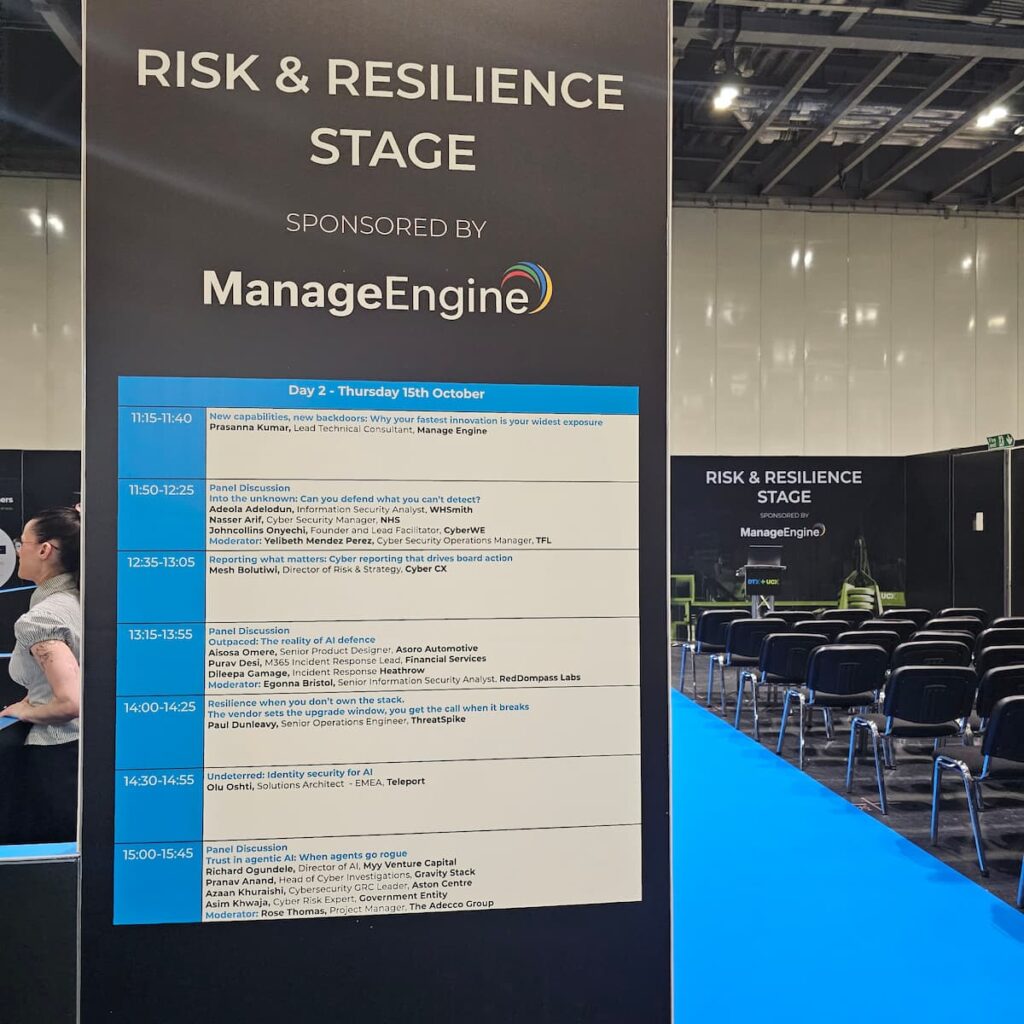
A highlight of the event was our presentation from Paul Dunleavy, Senior Operations Manager at ThreatSpike. He explored the growing challenge of maintaining operational resilience in environments where organisations depend heavily on technology controlled by external vendors.
From cloud infrastructure and managed service providers to payment systems and SaaS applications, businesses increasingly rely on systems they don’t directly operate. Yet when those systems fail, customers, employees and business leaders still expect their internal IT teams to resolve the disruption.
Paul’s session examined four responsibilities organisations must retain, regardless of who owns the underlying technology:
- Own the terms: Understand your providers’ responsibilities, service commitments and escalation procedures.
- Own the fallback: Establish how critical services will continue operating when primary systems become unavailable.
- Own the relationship: Maintain clear communication and accountability with customers and stakeholders during disruption.
- Own the response: Ensure your organisation has the visibility, authority and processes to respond effectively.
The central message was clear: outsourcing technology doesn’t mean outsourcing accountability.
Two Days of Conversations, Connections and New Perspectives
Beyond the presentations and technology discussions, DTX London 2026 provided a valuable opportunity to connect with the people responsible for keeping modern organisations running.
From conversations about AI and automation to the practical challenges of managing infrastructure and cybersecurity, it was great to exchange ideas with IT leaders, security professionals, partners and technology specialists.
A huge thank you to everyone who visited us at our stand, shared their experiences or attended Paul’s session.
Looking Ahead: Building More Resilient IT Environments
If there’s one message to take away from DTX London 2026, its that technological innovation must be matched by operational readiness.
AI, automation and modern infrastructure offer enormous opportunities for organisations to improve efficiency and performance. However, real progress depends on having the visibility, security and operational processes needed to support them.
As Paul summarised in his session: you don’t own the stack, you own the response. For ThreatSpike, that’s exactly why we’re focussed on bringing IT operations and cybersecurity together; helping organisations to reduce complexity, improve resilience and take greater control of their technology environments.
ThreatSpike is the AI-Managed IT and Security Platform, bringing together three core capabilities:
- Managed IT: Proactive management of infrastructure, devices and day-to-day IT operations.
- Defensive Security: Continuous security monitoring, detection, investigation and response.
- Offensive Security: Proactive security testing to identify vulnerabilities and improve resilience.
By combining these capabilities with AI and automation, ThreatSpike helps organisations reduce operational complexity, strengthen security and maintain greater control with a more coordinated and proactive approach.
Didn’t get a chance to meet us at DTX London 2026? Book a demo of the platform.